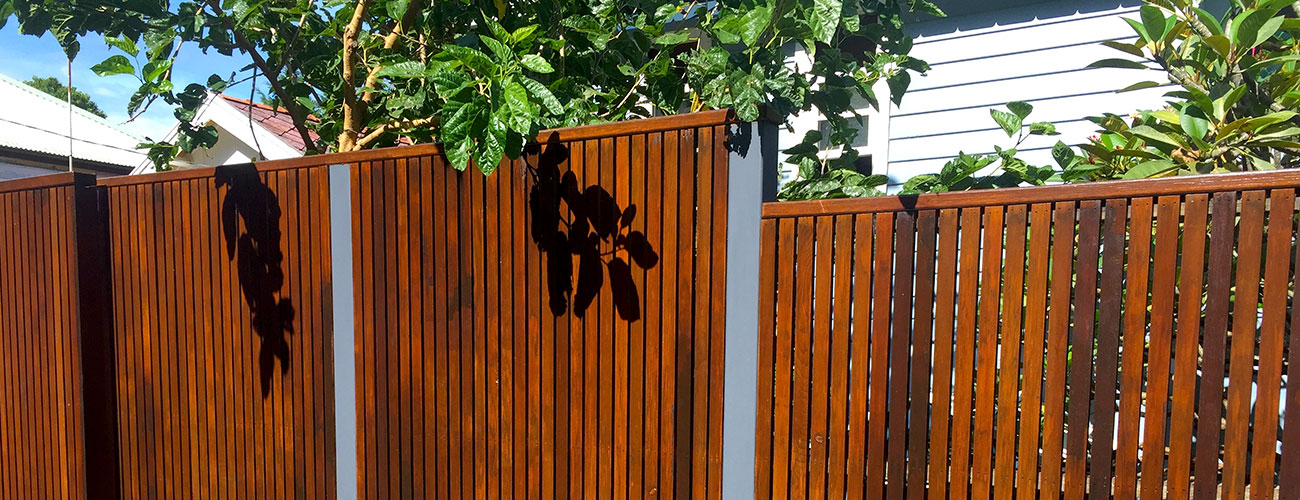
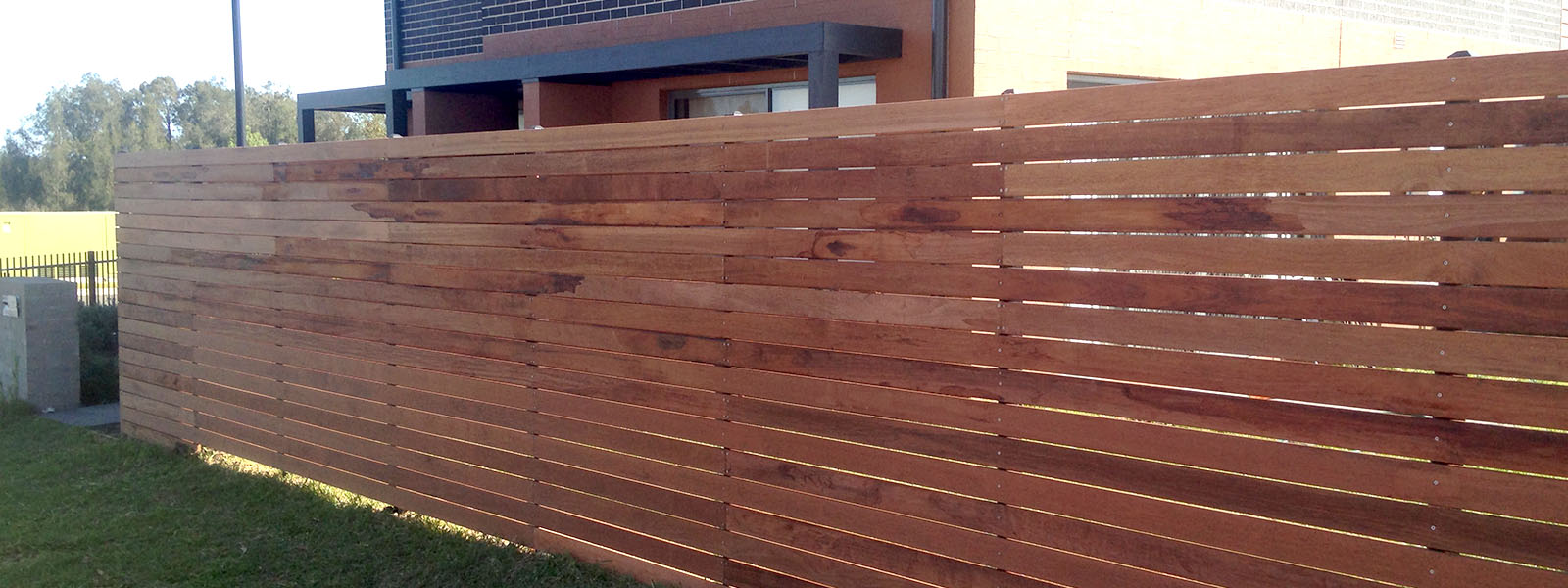

Slat fencing uses evenly spaced horizontal or vertical boards to create a modern boundary or feature. The gaps provide a lighter appearance and can allow some airflow and light while still defining the space.
Slat fencing can form a boundary or larger enclosure, while screening is often used for a targeted area such as a courtyard, bins, services or an entertaining space. The construction may be similar, but the purpose and dimensions differ.
The Amazing Fencing page describes treated pine and hardwood slats installed with galvanised steel posts and gate frames. Current material choices and profiles should be confirmed for the specific project.
Privacy depends on slat width, spacing, angle, height and viewing position. Narrower gaps provide more screening, while wider spacing increases airflow and openness. The layout should be selected for the intended view and use.
Yes. Slat screening can define a compact space without the visual weight of a fully solid fence. It is often used around courtyards, patios and side areas where appearance, airflow and partial screening are all important.
Yes. Screening can conceal bins, air-conditioning equipment, water tanks and other service areas while preserving access and ventilation. Required clearances for the equipment must be maintained.
A gate can often use matching slats and a galvanised steel frame. The frame, hinges and latch need to suit the gate size and weight, while slat alignment and spacing should be planned with the adjoining screen.
Slat fences can often be stepped or detailed for sloping ground. The gradient, post positions, desired top line and connections to gates or retaining walls determine the most suitable layout.
Keep the area clean, maintain drainage and inspect for loose fixings or surface wear. A compatible exterior coating can be used if a particular colour or finish is desired. Follow the timber and coating manufacturer's preparation and maintenance guidance.
Only a system that satisfies the applicable pool-barrier rules should be used as part of a pool enclosure. Slat spacing, height, climbability, gates and nearby objects are regulated. Obtain the required approval or certification for the property.
Spacing, orientation, timber, height and gate integration can often be tailored within structural, safety and product limits. Discuss the desired level of privacy, airflow and appearance during the design and quote stage.
Price depends on material, slat size and spacing, height, length, posts, frames, gates, finish, access and site complexity. A detailed measure and quote is needed to compare a feature screen with a full boundary fence.